The Home of 2025

Casa Nel 2025
2025 is the year when, if you have the fortune to be able to design or furnish a home, your choices must be intelligent. Not in the sense of “smart home” - or at least, not only.
Intelligent in the sense of being aware that home technology is finally mature enough to be reliable, but still young enough to evolve rapidly.
It’s a particular moment.
Until a few years ago, filling your home with smart devices meant being an early adopter, with all the compromises this entailed. Today it simply means making choices with a moment of care.
First Rule: Nothing is Forever
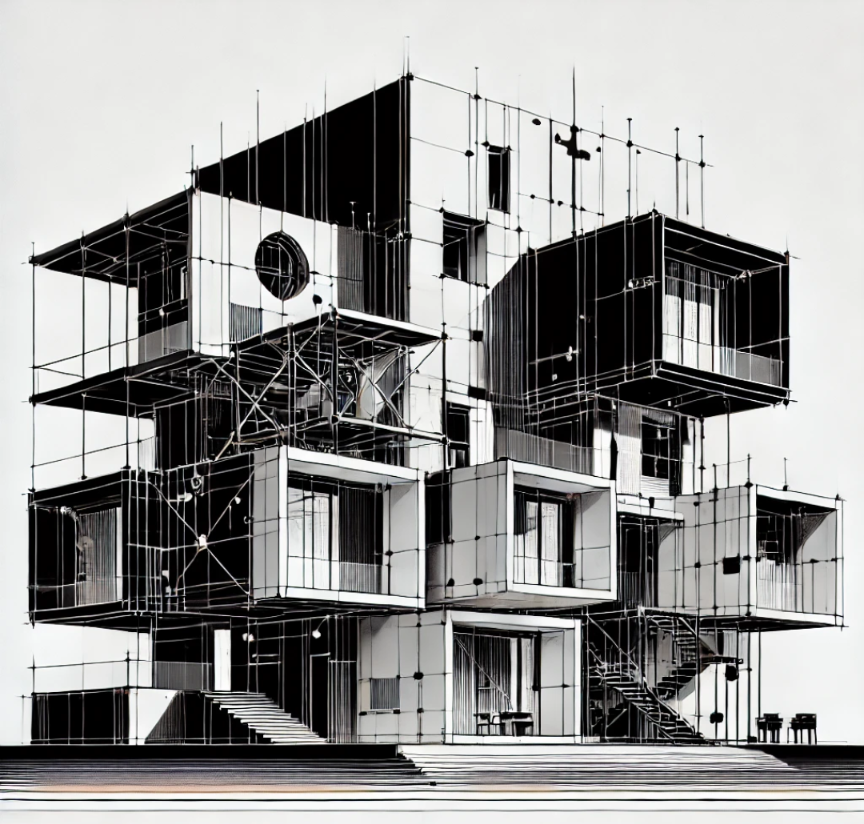
The first rule is simple: every element must be able to be replaced without necessarily having to touch the structure. It’s not a new rule - but in 2025 it has a very concrete meaning: look at those beautiful smart switches that some vendors propose you wire directly into the electrical system.
In two years, when their communication protocol is obsolete, will you have to call an electrician to replace them?
The key is modularity: every technological component should be like a Lego brick, easily replaceable with a better one when needed. This means setting up accessible junction boxes, hidden but reachable cable channels, and above all technical spaces that can accommodate devices that don’t exist yet today.
The “gilded cages” are everywhere. Amazon promises you a “complete ecosystem”, but try connecting a new Matter device (the new standard that should make everything work with everything™️) to your Echo and you’ll understand that “complete” means “complete as long as you do what we tell you”. IKEA is no better: their TRÅDFRI system promises universal compatibility but we’re not there yet.
And yes, if you want a simple life, closed ecosystems work - Apple HomeKit is reliable and secure, Google Home is intuitive.
The price is future freedom of choice, but it’s a compromise that many accept consciously and perhaps the most intelligent choice in general if the Matter bet pays off.
The ideal most modular is an open system like Home Assistant that can talk to everything, and above all, a solid network infrastructure.
In general, if a device doesn’t support Matter and Home Assistant, it gets downgraded compared to the competition.
New Rules
The rules of design and furnishing are changing according to the new reality we find ourselves in.
Take robot vacuums as an example.
In 2024, the Budget that once would have bought you a mediocre robot today gives you access to machines that:
- Empty themselves autonomously
- Distinguish and adapt to surfaces
- Function as security systems
- Also wash floors in advanced models
This evolution changes the way we design spaces.
Furniture must follow a simple rule: be completely raised from the ground to allow the robot to pass or completely on the ground to avoid dust accumulation.
A poorly designed space becomes an obstacle, both for people and for technology.

The Active home
It’s no longer a question of adding technology - it’s a question of using it to solve real problems that we often don’t even know we have.
The best automations of 2025 are almost invisible:
- Motion sensors that turn on soft lights at night, working even without internet
- Thermostats that learn your habits without asking you anything
- Curtains that follow the sun but that you can always move by hand
- Spaces designed to facilitate automatic maintenance
- Intelligent ventilation that monitors the quality of the air you breathe
- Irrigation that considers soil humidity and local weather forecasts
The air example is perhaps the most powerful: you don’t see indoor pollution, but it profoundly influences your life.
A good ventilation system is like an invisible butler that ensures you always breathe clean air.
The real question isn’t whether home technology will continue to evolve - it certainly will. The question is whether we’ll continue to chase the latest novelty or start designing truly sustainable homes, not only ecologically but also technologically.
Every proprietary system we adopt is a potential future constraint. Every seemingly convenient choice today could become a hidden cost tomorrow.
True innovation in home design of 2025 isn’t having the latest technology - it’s creating spaces that can welcome it or reject it, according to your needs.
Finally we can design homes that evolve with us, instead of homes that imprison us in their promises.
This freedom manifests in daily details:
- Automatic curtains that also have a traditional manual mode
- Smart lights with physical switches where centuries of experience have taught us they’re needed
- Physical knobs, because some gestures are intuitive by nature
Sometimes, the most intelligent technology is the one that knows how to step aside.
And perhaps this is exactly the secret of a well-designed home in 2025.
A place that evolves with you, that protects you without suffocating you, that supports you without controlling you.
The true home of the future isn’t the most technological one; it’s the one that makes you feel more human.